Thursday, January 7, 2016

THE GODS OF H.P. LOVECRAFT Review

The Gods of H.P. Lovecraft by Aaron J. French (ed.)
JournalStone, 2015

An Above-Average Cthulhu Mythos Anthology 

 (I received a free copy of this book in exchange for an honest review.)

 So... what we have here is an anthology of a dozen short stories by various authors, all set (more or less) in the shared universe created by the American writer H.P. Lovecraft and various literary friends of his that has come to be known as the "Cthulhu Mythos". Each story is keyed to a particular entity (the "gods" of the title) in said universe. Additionally, there is a brief description of each entity by writer Donald Tyson, as well as black-and-white illustrations (mostly quite good) by various artists. 

How are the stories? For the most part, they're pretty good, too. The only outright clunker, in this reviewer's humble opinion, is Martha Wells' "The Dark Gates", which apparently ties into an ongoing series of her own. If you're already a fan of her work, it's probably perfectly acceptable, but as I knew nothing about the universe it was set it, it mostly left me feeling unpleasantly bemused. On the other hand, the very next tale in the collection, "We Smoke the Northern Lights" by the gifted Laird Barron, is probably the most hugely entertaining story I've come across in recent memory in this or any other genre. My friend Randy Stafford informs me that this story comprises half of Barron's new novella X's For Eyes; as soon as I'm done writing this review, I'm gonna purchase myself a copy.

 Should you buy this book? If you're completely new to this type of writing, frankly, no. I would say your time is much better spent familiarizing yourself with the work of Lovecraft himself and his friends (Clark Ashton Smith, Robert E. Howard, Frank Belknap Long, etc.) who created the Mythos universe. If you're already familiar with these writers and want to get to know the work of with contemporary writers working in this tradition, you could do better than this collection (Darrell Schweitzer's profoundly disturbing post-apocalyptic-themed Mythos collection Cthulhu's Reign springs to mind as an example). Having said that, and considering the large amount of dreck that out there in this sub-genre and the unusually consistency of this anthology, you could also do a whole hell of a lot worse.

Rating: 4 stars (out of 5)


H.P. Lovecraft, 1934 (source)

Tuesday, June 25, 2013

Why I Read What I Read

I just had a sort of mini-epiphany that I thought I'd share.

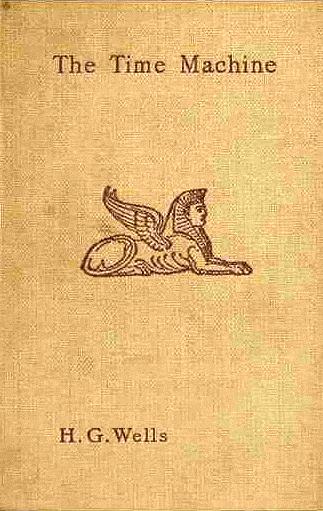
Said epiphany pertains to why I read what I read. Executive summary: I read (mostly) the sort of books that I would have read when I was ten years old if I had had the attention span that I do now. To clarify: I first got heavily into the science fiction genre when I was about ten years old. That was the age I was when the first Star Wars movie came out; it was also about the age I was when I discovered the original Star Trek series in syndication. It was also about this time that I discovered that SF wasn't just a movie genre and a TV genre - it was a literary genre as well. I discovered in books like The People's Almanac and magazines like Starlog (both of which I still remember with enormous fondness) that there were actually books by people with names like H.G. Wells and Arthur C. Clarke that, broadly speaking, dealt with the same kinds of situations that my then-favorite movies and TV shows did. Here's what happened when I got my hands on one of those books and tried to read it, however: I remember being ten or perhaps a little older and getting a copy of Wells' The Time Machine and trying to read it (if you haven't read it, click on the boldface title you just saw - it will take you to Project Gutenberg's ebook version and you can read it there (seriously, do it - it's really good and it's actually a not-very-long and pretty fast-paced novella - if you just had breakfast you should be able to finish it before lunch time)) and saying to myself (keep in mind I'm ten here), "Oh my God! This is so long!" This is of course pretty laughable to me now, but looking at it from another perspective, you can say it was pretty good of a kid that age to even attempt a a classic piece of fiction like that at that age when it wasn't assigned in school or anything.

So - back on topic - why am I reading so much Wells and Clarke and Harlan Ellison and Thomas More these days? Because, like I said, they're authors I wanted to read when I was ten, but couldn't.

Just wish I could decide whether that's a good thing or not.


Monday, April 29, 2013

Why Rock Criticism Still Sucks

"...this essentially reactionary attitude became the prevailing orthodoxy in rock's critical establishment." And remains so to this day, I fear.

The dominant [critical] view came to be that of [Jon] Landau and Esquire's Robert Christgau, and it focused on two things: technical excellence and the primacy of the African American roots of the music. As Chrtistgau wrote, "the problem is that when poetry, musical complexity, and psychedelic basso-profundity come into the music, its original values - simplicity, directness, charm - are often obscured." This became code for limiting rock to three-minute songs with clever hooks, and the [Grateful] Dead clearly failed that test. That spring, Christgau wrote, "Most hippie rock and roll musicians exhibit the same in-group pretentiousness that characterized the folk and jazz purists who were their predecessors." Though Christgau himself would be more flexible in the future, Landau would not. In his defining critical manifesto, "Rock and Art," Landau declaimed, "Rock was not intended to be reflective or profound." Where this left Bob Dylan went unsaid, but this essentially reactionary attitude became the prevailing orthodoxy in rock's critical establishment.

- From A Long Strange Trip: The Inside History of the Grateful Dead by Dennis McNally


(Art by Bob Thomas)

Sunday, December 30, 2012

Leftist Propaganda?

You be the judge.

America is the wealthiest nation on Earth, but its people are mainly poor, and poor Americans are urged to hate themselves To quote the American humorist Kin Hubbard, 'It ain't no disgrace to be poor, but might as well be.' It is in fact a crime for an American to be poor, even though America is a nation of poor. Every other nation has folk traditions of men who were poor but extremely wise and virtuous, and therefore more estimable than anyone with power and gold. No such tales are told by the American poor. They mock themselves and glorify their betters. The meanest eating or drinking establishment, owned by a man who is himself poor, is very likely to have a sign on its wall asking this cruel question: 'If you're so smart, why ain't you rich?' There will also be an American flag no larger than a child's hand-glued to a lollipop stick and flying from the cash register.

Americans, like human beings everywhere, believe many things that are obviously untrue... Their most destructive untruth is that it is very easy for any American to make money. They will not acknowledge how in fact hard money is to come by, and, therefore, those who have no money blame and blame and blame themselves. This inward blame has been a treasure for the rich and powerful, who have had to do less for their poor, publicly and privately, than any other ruling class since, say, Napoleonic times.

Many novelties have come from America. The most startling of these, a thing without precedent, is a mass of undignified poor. They do not love one another because they do not love themselves.

- Kurt Vonnegut, Slaughterhouse-Five


Sunday, February 19, 2012

Speculative Fiction Shorts: "To Serve Man" By Damon Knight

This post (my first in forever) is dedicated to my good friends Amy Whelan (who encouraged me to get off my butt and post this (or, more accurately, encouraged me to get my butt on the computer chair and post this) and Melanie Whipple (who reminded me of the classic Twilight Zone episode that is adapted from it. This is surely one of the great twist ending science fiction stories of the twentieth century, which is almost certainly why Rod Serling & co. chose it for The Twilight Zone.


To Serve Man

By Damon Knight

Galaxy, November 1950

The Kanamit were not very pretty, it’s true. They looked something like pigs and something like people, and that is not an attractive combination. Seeing them for the first time shocked you; that was their handicap. When a thing with the countenance of a fiend comes from the stars and offers a gift, you are disinclined to accept.

I don’t know what we expected interstellar visitors to look like — those who thought about it at all, that is. Angels, perhaps, or something too alien to be really awful. Maybe that’s why we were all so horrified and repelled when they landed in their great ships and we saw what they really were like.

The Kanamit were short and very hairy-thick bristly brown-gray hair all over their abominably plump bodies. Their noses were snoutlike and their eyes small, and they had thick hands of three fingers each. They wore green leather harness and green shorts, but I think the shorts were a concession to our notions of public decency. The garments were quite modishly cut, with slash pockets and half-belts in the back. The Kanamit had a sense of humor, anyhow.

There were three of them at this session of the U.N., and, lord, I can’t tell you how queer it looked to see them there in the middle of a solemn plenary session — three fat piglike creatures in green harness and shorts, sitting at the long table below the podium, surrounded by the packed arcs of delegates from every nation. They sat correctly upright, politely watching each speaker. Their flat ears drooped over the earphones. Later on, I believe, they learned every human language, but at this time they knew only French and English.

They seemed perfectly at ease — and that, along with their humor, was a thing that tended to make me like them. I was in the minority; I didn’t think they were trying to put anything over.

The delegate from Argentina got up and said that his government was interested in the demonstration of a new cheap power source, which the Kanamit had made at the previous session, but that the Argentine government could not commit itself as to its future policy without a much more thorough examination.

It was what all the delegates were saying, but I had to pay particular attention to Senor Valdes, because he tended to sputter and his diction was bad. I got through the translation all right, with only one or two momentary hesitations, and then switched to the Polish-English line to hear how Grigori was doing with Janciewicz. Janciewicz was the cross Grigori had to bear, just as Valdes was mine.

Janciewicz repeated the previous remarks with a few ideological variations, and then the Secretary-General recognized the delegate from France, who introduced Dr. Denis Leveque, the criminologist, and a great deal of complicated equipment was wheeled in.

Dr. Leveque remarked that the question in many people’s minds had been aptly expressed by the delegate from the U.S.S.R. at the preceding session, when he demanded, “What is the motive of the Kanamit? What is their purpose in offering us these unprecedented gifts, while asking nothing in return?”

The doctor then said, “At the request of several delegates and with the full consent of our guests, the Kanamit, my associates and I have made a series of tests upon the Kanamit with the equipment which you see before you. These tests will now be repeated.”

A murmur ran through the chamber. There was a fusillade of flashbulbs, and one of the TV cameras moved up to focus on the instrument board of the doctor’s equipment. At the same time, the huge television screen behind the podium lighted up, and we saw the blank faces of two dials, each with its pointer resting at zero, and a strip of paper tape with a stylus point resting against it.

The doctor’s assistants were fastening wires to the temples of one of the Kanamit, wrapping a canvas-covered rubber tube around his forearm, and taping something to the palm of his right hand.

In the screen, we saw the paper tape begin to move while the stylus traced a slow zigzag pattern along it. One of the needles began to jump rhythmically; the other flipped halfway over and stayed there, wavering slightly.

“These are the standard instruments for testing the truth of a statement,” said Dr. Leveque. “Our first object, since the physiology of the Kanamit is unknown to us, was to determine whether or not they react to these tests as human beings do. We will now repeat one of the many experiments which were made in the endeavor to discover this.”

He pointed to the first dial. “This instrument registers the subject’s heartbeat. This shows the electrical conductivity of the skin in the palm of his hand, a measure of perspiration, which increases under stress. And this –” pointing to the tape-and-stylus device — “shows the pattern and intensity of the electrical waves emanating from his brain. It has been shown, with human subjects, that all these readings vary markedly depending upon whether the subject is speaking the truth.”

He picked up two large pieces of cardboard, one red and one black. The red one was a square about three feet on a side; the black was a rectangle three and a half feet long. He addressed himself to the Kanama.

“Which of these is longer than the other?”

“The red,” said the Kanama.

Both needles leaped wildly, and so did the line on the unrolling tape.

“I shall repeat the question,” said the doctor. “Which of these is longer than the other?”

“The black,” said the creature.

This time the instruments continued in their normal rhythm.

“How did you come to this planet?” asked the doctor.

“Walked,” replied the Kanama.

Again the instruments responded, and there was a subdued ripple of laughter in the chamber.

“Once more,” said the doctor. “How did you come to this planet?”

“In a spaceship,” said the Kanama, and the instruments did not jump.

The doctor again faced the delegates. “Many such experiments were made,” he said, “and my colleagues and myself are satisfied that the mechanisms are effective. Now –” he turned to the Kanama — “I shall ask our distinguished guest to reply to the question put at the last session by the delegate of the U.S.S.R. — namely, what is the motive of the Kanamit people in offering these great gifts to the people of Earth?”

The Kanama rose. Speaking this time in English, he said, “On my Planet there is a saying, ‘There are more riddles in a stone than in a philosopher’s head.’ The motives of intelligent beings, though they may at times appear obscure, are simple things compared to the complex workings of the natural universe. Therefore I hope that the people of Earth will understand, and believe, when I tell you that our mission upon your planet is simply this — to bring to you the peace and plenty which we ourselves enjoy, and which we have in the past brought to other races throughout the galaxy. When your world has no more hunger, no more war, no more needless suffering, that will be our reward.”

And the needles had not jumped once.

The delegate from the Ukraine jumped to his feet, asking to be recognized, but the time was up and the Secretary-General closed the session.

I met Grigori as we were leaving the chamber. His face was red with excitement. “Who promoted that circus?” he demanded.

“The tests looked genuine to me,” I told him.

“A circus!” he said vehemently. “A second-rate farce! If they were genuine, Peter, why was debate stifled?”

“There’ll be time for debate tomorrow, surely.”

“Tomorrow the doctor and his instruments will be back in Paris. Plenty of things can happen before tomorrow. In the name of sanity, man, how can anybody trust a thing that looks as if it ate the baby?”

I was a little annoyed. I said, “Are you sure you’re not more worried about their politics than their appearance?”

He said, “Bah,” and went away.

The next day reports began to come in from government laboratories all over the world where the Kanamit’s power source was being tested. They were wildly enthusiastic. I don’t understand such things myself, but it seemed that those little metal boxes would give more electrical power than an atomic pile, for next to nothing and nearly forever. And it was said that they were so cheap to manufacture that everybody in the world could have one of his own. In the early afternoon there were reports that seventeen countries had already begun to set up factories to turn them out.

The next day the Kanamit turned up with plans and specimens of a gadget that would increase the fertility of any arable land by 60 to 100 per cent. It speeded the formation of nitrates in the soil, or something. There was nothing in the newscasts any more but stories about the Kanamit. The day after that, they dropped their bombshell.

“You now have potentially unlimited power and increased food supply,” said one of them. He pointed with his three-fingered hand to an instrument that stood on the table before him. It was a box on a tripod, with a parabolic reflector on the front of it. “We offer you today a third gift which is at least as important as the first two.”

He beckoned to the TV men to roll their cameras into closeup position. Then he picked up a large sheet of cardboard covered with drawings and English lettering. We saw it on the large screen above the podium; it was all clearly legible.

“We are informed that this broadcast is being relayed throughout your world,” said the Kanama. “I wish that everyone who has equipment for taking photographs from television screens would use it now.”

The Secretary-General leaned forward and asked a question sharply, but the Kanama ignored him.

“This device,” he said, “generates a field in which no explosive, of whatever nature, can detonate.”

There was an uncomprehending silence.

The Kanama said, “It cannot now be suppressed. If one nation has it, all must have it.” When nobody seemed to understand, he explained bluntly, “There will be no more war.”

That was the biggest news of the millennium, and it was perfectly true. It turned out that the explosions the Kanama was talking about included gasoline and Diesel explosions. They had simply made it impossible for anybody to mount or equip a modern army.

We could have gone back to bows and arrows, of course, but that wouldn’t have satisfied the military. Besides, there wouldn’t be any reason to make war. Every nation would soon have everything.

Nobody ever gave another thought to those lie-detector experiments, or asked the Kanamit what their politics were. Grigori was put out; he had nothing to prove his suspicions.

I quit my job with the U.N. a few months later, because I foresaw that it was going to die under me anyhow. U.N. business was booming at the time, but after a year or so there was going to be nothing for it to do. Every nation on Earth was well on the way to being completely self-supporting; they weren’t going to need much arbitration.

I accepted a position as translator with the Kanamit Embassy, and it was there that I ran into Grigori again. I was glad to see him, but I couldn’t imagine what he was doing there.

“I thought you were on the opposition.” I said. “Don’t tell me you’re convinced the Kanamit are all right.”

He looked rather shamefaced. “They’re not what they look, anyhow,” he said.

It was as much of a concession as he could decently make, and I invited him down to the embassy lounge for a drink. It was an intimate kind of place, and he grew confidential over the second daiquiri.

“They fascinate me,” he said. “I hate them instinctively still — that hasn’t changed — but I can evaluate it. You were right, obviously; they mean us nothing but good. But do you know –” he leaned across the table — ” the question of the Soviet delegate was never answered.”

I am afraid I snorted.

“No, really,” he said. They told us what they wanted to do — ‘to bring to you the peace and plenty which we ourselves enjoy.’ But they didn’t say why.”

“Why do missionaries — “

“Missionaries be damned!” he said angrily. “Missionaries have a religious motive. If these creatures have a religion, they haven’t once mentioned it. What’s more, they didn’t send a missionary group; they sent a diplomatic delegation — a group representing the will and policy of their whole people. Now just what have the Kanamit, as a people or a nation, got to gain from our welfare?”

I said, “Cultural — “

“Cultural cabbage soup! No, it’s something less obvious than that, something obscure that belongs to their psychology and not to ours. But trust me, Peter, there is no such thing as a completely disinterested altruism. In one way or another, they have something to gain.”

“And that’s why you’re here,” I said. “To try to find out what it is.”

“Correct. I wanted to get on one of the ten-year exchange groups to their home planet, but I couldn’t, the quota was filled a week after they made the announcement. This is the next best thing. I’m studying their language, and you know that language reflects the basic assumptions of the people who use it. I’ve got a fair command of the spoken lingo already. It’s not hard, really, and there are hints in it. Some of the idioms are quite similar to English. I’m sure I’ll get the answer eventually.’

“More power,” I said, and we went back to work.

I saw Grigori frequently from then on, and he kept me posted about his progress. He was highly excited about a month after that first meeting; said he’d got hold of a book of the Kanamit’s and was trying to puzzle it out. They wrote in ideographs, worse than Chinese, but he was determined to fathom it if it took him years. He wanted my help.

Well, I was interested in spite of myself, for I knew it would be a long job. We spent some evenings together, working with material from Kanamit bulletin boards and so forth, and with the extremely limited English-Kanamit dictionary they issued to the staff. My conscience bothered me about the stolen book, but gradually I became absorbed by the problem. Languages are my field, after all. I couldn’t help being fascinated.

We got the title worked out in a few weeks. It was How to Serve Man, evidently a handbook they were giving out to new Kanamit members of the embassy staff. They had new ones in, all the time now, a shipload about once a month; they were opening all kinds of research laboratories, clinics and so on. If there was anybody on Earth besides Grigori who still distrusted those people, he must have been somewhere in the middle of Tibet.

It was astonishing to see the changes that had been wrought in less than a year. There were no more standing armies, no more shortages, no unemployment. When you picked up a newspaper you didn’t see H-BOMB or SATELLITE leaping out at you; the news was always good. It was a hard thing to get used to. The Kanamit were working on human biochemistry, and it was known around the embassy that they were nearly ready to announce methods of making our race taller and stronger and healthier — practically a race of supermen — and they had a potential cure for heart disease and cancer.

I didn’t see Grigori for a fortnight after we finished working out the title of the book; I was on a long-overdue vacation in Canada. When I got back, I was shocked by the change in his appearance.

“What on earth is wrong, Grigori?” I asked. “You look like the very devil.”

“Come down to the lounge.”

I went with him, and he gulped a stiff Scotch as if he needed it.

“Come on, man, what’s the matter?” I urged.

“The Kanamit have put me on the passenger list for the next exchange ship,” he said. “You, too, otherwise I wouldn’t be talking to you.”

“Well,” I said, “but — “

“They’re not altruists.”

I tried to reason with him. I pointed out they’d made Earth a paradise compared to what it was before. He only shook his head.

Then I said, “Well, what about those lie-detector tests?”

“A farce,” he replied, without heat. “I said so at the time, you fool. They told the truth, though, as far as it went.”

“And the book?” I demanded, annoyed. “What about that — How to Serve Man? That wasn’t put there for you to read. They mean it. How do you explain that?”

“I’ve read the first paragraph of that book,” he said. “Why do you suppose I haven’t slept for a week?”

I said, “Well?” and he smiled a curious, twisted smile.

“It’s a cookbook,” he said.


Copyright 1950 by Galaxy Publishing Corp. Copright 1961 by Damon Knight. Many thanks to Mr. Write for posting an HTML version of this on the internets.


Cover of the issue of GALAXY SCIENCE FICTION in which "To Serve Man" originally appeared

Thursday, July 21, 2011

Speculative Fiction Not-So-Shorts: A Voyage to Arcturus by David Lindsay

Okay, I realize that, up until now, I've almost exclusively posted short stories or poems in my Speculative Fiction features. But this one's different. This one's special. This is one of C.S. Lewis' favorite novels. This is one of Philip Jose Farmer's favorite novels. This is one of Alan Moore's favorite novels. This is, believe it or not, one of Harold Fucking Bloom's favorite novels - loved it so much he even wrote a sequel to it, as a matter of fact (and dig on that groovy cover, willya?). This is the one and only, hyperbole-inducing, sui generis science fantasy classic...

A Voyage to Arcturus by David Lindsay

Dude. I'm so there.


Art by Bob Pepper

Thursday, May 19, 2011

Stephen King's Ten Favorite Horror Books or Short Stories

An interesting list I found at Google Books in a volume entitled Stephen King from A to Z. I've provide links for all the pieces, including links to their complete online texts if available.

Ghost Story (1979) - Peter Straub
Dracula (1897) - Bram Stoker
The Haunting of Hill House (1959) - Shirley Jackson
The Strange Case of Dr. Jekyll and Mr. Hyde* (1886) - Robert Louis Stevenson
Burnt Offerings (1973) - Robert Marasco
"Casting the Runes" (1911) - M.R. James
"The Two Bottles Of Relish" (1932) - Lord Dunsany
"The Great God Pan" (1894) - Arthur Machen
"The Upper Berth" (1894) - F. Marion Crawford
"The Colour Out of Space" (1927) - H.P. Lovecraft

*The link is to a very thoroughly annotated version of the novella at Wikisource


Poster for the 1931 film version of Stevenson's tale.


(Anybody know the artist on this one? It's signed, but I can't quite make it out ("Norley", maybe?))


Ms. Jackson's long-awaited first volume in the Library of America

Wednesday, January 26, 2011

Speculative Fiction Shorts: "Till A' The Seas" by H.P. Lovecraft and R.H. Barlow

[Talk about global warming! PS Yes, I'm still on my Dying Earth kick from last year. - Art]


“Till A’ the Seas”
By H. P. Lovecraft and R. H. Barlow


Upon an eroded cliff-top rested the man, gazing far across the valley. Lying thus, he could see a great distance, but in all the sere expanse there was no visible motion. Nothing stirred the dusty plain, the disintegrated sand of long-dry river-beds, where once coursed the gushing streams of Earth’s youth. There was little greenery in this ultimate world, this final stage of mankind’s prolonged presence upon the planet. For unnumbered aeons the drought and sandstorms had ravaged all the lands. The trees and bushes had given way to small, twisted shrubs that persisted long through their sturdiness; but these, in turn, perished before the onslaught of coarse grasses and stringy, tough vegetation of strange evolution.
The ever-present heat, as Earth drew nearer to the sun, withered and killed with pitiless rays. It had not come at once; long aeons had gone before any could feel the change. And all through those first ages man’s adaptable form had followed the slow mutation and modelled itself to fit the more and more torrid air. Then the day had come when men could bear their hot cities but ill, and a gradual recession began, slow yet deliberate. Those towns and settlements closest to the equator had been first, of course, but later there were others. Man, softened and exhausted, could cope no longer with the ruthlessly mounting heat. It seared him as he was, and evolution was too slow to mould new resistances in him.
Yet not at first were the great cities of the equator left to the spider and the scorpion. In the early years there were many who stayed on, devising curious shields and armours against the heat and the deadly dryness. These fearless souls, screening certain buildings against the encroaching sun, made miniature worlds of refuge wherein no protective armour was needed. They contrived marvellously ingenious things, so that for a while men persisted in the rusting towers, hoping thereby to cling to old lands till the searing should be over. For many would not believe what the astronomers said, and looked for a coming of the mild olden world again. But one day the men of Dath, from the new city of Niyara, made signals to Yuanario, their immemorially ancient capital, and gained no answer from the few who remained therein. And when explorers reached that millennial city of bridge-linked towers they found only silence. There was not even the horror of corruption, for the scavenger lizards had been swift.
Only then did the people fully realize that these cities were lost to them; know that they must forever abandon them to nature. The other colonists in the hot lands fled from their brave posts, and total silence reigned within the high basalt walls of a thousand empty towns. Of the dense throngs and multitudinous activities of the past, nothing finally remained. There now loomed against the rainless deserts only the blistered towers of vacant houses, factories, and structures of every sort, reflecting the sun’s dazzling radiance and parching in the more and more intolerable heat.
Many lands, however, had still escaped the scorching blight, so that the refugees were soon absorbed in the life of a newer world. During strangely prosperous centuries the hoary deserted cities of the equator grew half-forgotten and entwined with fantastic fables. Few thought of those spectral, rotting towers . . . those huddles of shabby walls and cactus-choked streets, darkly silent and abandoned. . . .
Wars came, sinful and prolonged, but the times of peace were greater. Yet always the swollen sun increased its radiance as Earth drew closer to its fiery parent. It was as if the planet meant to return to that source whence it was snatched, aeons ago, through the accidents of cosmic growth.
After a time the blight crept outward from the central belt. Southern Yarat burned as a tenantless desert—and then the north. In Perath and Baling, those ancient cities where brooding centuries dwelt, there moved only the scaly shapes of the serpent and the salamander, and at last Loton echoed only to the fitful falling of tottering spires and crumbling domes.
Steady, universal, and inexorable was the great eviction of man from the realms he had always known. No land within the widening stricken belt was spared; no people left unrouted. It was an epic, a titan tragedy whose plot was unrevealed to the actors—this wholesale desertion of the cities of men. It took not years or even centuries, but millennia of ruthless change. And still it kept on—sullen, inevitable, savagely devastating.
Agriculture was at a standstill, the world fast became too arid for crops. This was remedied by artificial substitutes, soon universally used. And as the old places that had known the great things of mortals were left, the loot salvaged by the fugitives grew smaller and smaller. Things of the greatest value and importance were left in dead museums—lost amid the centuries—and in the end the heritage of the immemorial past was abandoned. A degeneracy both physical and cultural set in with the insidious heat. For man had so long dwelt in comfort and security that this exodus from past scenes was difficult. Nor were these events received phlegmatically; their very slowness was terrifying. Degradation and debauchery were soon common; government was disorganized, and the civilizations aimlessly slid back toward barbarism.
When, forty-nine centuries after the blight from the equatorial belt, the whole western hemisphere was left unpeopled, chaos was complete. There was no trace of order or decency in the last scenes of this titanic, wildly impressive migration. Madness and frenzy stalked through them, and fanatics screamed of an Armageddon close at hand.
Mankind was now a pitiful remnant of the elder races, a fugitive not only from the prevailing conditions, but from his own degeneracy. Into the northland and the antarctic went those who could; the rest lingered for years in an incredible saturnalia, vaguely doubting the forthcoming disasters. In the city of Borligo a wholesale execution of the new prophets took place, after months of unfulfilled expectations. They thought the flight to the northland unnecessary, and looked no longer for the threatened ending.
How they perished must have been terrible indeed—those vain, foolish creatures who thought to defy the universe. But the blackened, scorched towns are mute. . . .
These events, however, must not be chronicled—for there are larger things to consider than this complex and unhastening downfall of a lost civilization. During a long period morale was at lowest ebb among the courageous few who settled upon the alien arctic and antarctic shores, now mild as were those of southern Yarat in the long-dead past. But here there was respite. The soil was fertile, and forgotten pastoral arts were called into use anew. There was, for a long time, a contented little epitome of the lost lands; though here were no vast throngs or great buildings. Only a sparse remnant of humanity survived the aeons of change and peopled those scattered villages of the later world.
How many millennia this continued is not known. The sun was slow in invading this last retreat; and as the eras passed there developed a sound, sturdy race, bearing no memories or legends of the old, lost lands. Little navigation was practiced by this new people, and the flying machine was wholly forgotten. Their devices were of the simplest type, and their culture was simple and primitive. Yet they were contented, and accepted the warm climate as something natural and accustomed.
But unknown to these simple peasant-folk, still further rigours of nature were slowly preparing themselves. As the generations passed, the waters of the vast and unplumbed ocean wasted slowly away; enriching the air and the desiccated soil, but sinking lower and lower each century. The splashing surf still glistened bright, and the swirling eddies were still there, but a doom of dryness hung over the whole watery expanse. However, the shrinkage could not have been detected save by instruments more delicate than any then known to the race. Even had the people realized the ocean’s contraction, it is not likely that any vast alarm or great disturbance would have resulted, for the losses were so slight, and the seas so great. . . . Only a few inches during many centuries—but in many centuries; increasing—


* * *

So at last the oceans went, and water became a rarity on a globe of sun-baked drought. Man had slowly spread over all the arctic and antarctic lands; the equatorial cities, and many of later habitation, were forgotten even to legend.
And now again the peace was disturbed, for water was scarce, and found only in deep caverns. There was little enough, even of this; and men died of thirst wandering in far places. Yet so slow were these deadly changes, that each new generation of man was loath to believe what it heard from its parents. None would admit that the heat had been less or the water more plentiful in the old days, or take warning that days of bitterer burning and drought were to come. Thus it was even at the end, when only a few hundred human creatures panted for breath beneath the cruel sun; a piteous huddled handful out of all the unnumbered millions who had once dwelt on the doomed planet.
And the hundreds became small, till man was to be reckoned only in tens. These tens clung to the shrinking dampness of the caves, and knew at last that the end was near. So slight was their range that none had ever seen the tiny, fabled spots of ice left close to the planet’s poles—if such indeed remained. Even had they existed and been known to man, none could have reached them across the trackless and formidable deserts. And so the last pathetic few dwindled. . . .
It cannot be described, this awesome chain of events that depopulated the whole Earth; the range is too tremendous for any to picture or encompass. Of the people of Earth’s fortunate ages, billions of years before, only a few prophets and madmen could have conceived that which was to come—could have grasped visions of the still, dead lands, and long-empty sea-beds. The rest would have doubted . . . doubted alike the shadow of change upon the planet and the shadow of doom upon the race. For man has always thought himself the immortal master of natural things. . . .


II.

When he had eased the dying pangs of the old woman, Ull wandered in a fearful daze out into the dazzling sands. She had been a fearsome thing, shrivelled and so dry; like withered leaves. Her face had been the colour of the sickly yellow grasses that rustled in the hot wind, and she was loathsomely old.
But she had been a companion; someone to stammer out vague fears to, to talk to about this incredible thing; a comrade to share one’s hopes for succour from those silent other colonies beyond the mountains. He could not believe none lived elsewhere, for Ull was young, and not certain as are the old.
For many years he had known none but the old woman—her name was Mladdna. She had come that day in his eleventh year, when all the hunters went to seek food, and did not return. Ull had no mother that he could remember, and there were few women in the tiny group. When the men vanished, those three women, the young one and the two old, had screamed fearfully, and moaned long. Then the young one had gone mad, and killed herself with a sharp stick. The old ones buried her in a shallow hole dug with their nails, so Ull had been alone when this still older Mladdna came.
She walked with the aid of a knotty pole, a priceless relique of the old forests, hard and shiny with years of use. She did not say whence she came, but stumbled into the cabin while the young suicide was being buried. There she waited till the two returned, and they accepted her incuriously.
That was the way it had been for many weeks, until the two fell sick, and Mladdna could not cure them. Strange that those younger two should have been stricken, while she, infirm and ancient, lived on. Mladdna had cared for them many days, and at length they died, so that Ull was left with only the stranger. He screamed all the night, so she became at length out of patience, and threatened to die too. Then, hearkening, he became quiet at once; for he was not desirous of complete solitude. After that he lived with Mladdna and they gathered roots to eat.
Mladdna’s rotten teeth were ill suited to the food they gathered, but they contrived to chop it up till she could manage it. This weary routine of seeking and eating was Ull’s childhood.
Now he was strong, and firm, in his nineteenth year, and the old woman was dead. There was naught to stay for, so he determined at once to seek out those fabled huts beyond the mountains, and live with the people there. There was nothing to take on the journey. Ull closed the door of his cabin—why, he could not have told, for no animals had been there for many years—and left the dead woman within. Half-dazed, and fearful at his own audacity, he walked long hours in the dry grasses, and at length reached the first of the foothills. The afternoon came, and he climbed until he was weary, and lay down on the grasses. Sprawled there, he thought of many things. He wondered at the strange life, passionately anxious to seek out the lost colony beyond the mountains; but at last he slept.
When he awoke there was starlight on his face, and he felt refreshed. Now that the sun was gone for a time, he travelled more quickly, eating little, and determining to hasten before the lack of water became difficult to bear. He had brought none; for the last people, dwelling in one place and never having occasion to bear their precious water away, made no vessels of any kind. Ull hoped to reach his goal within a day, and thus escape thirst; so he hurried on beneath the bright stars, running at times in the warm air, and at other times lapsing into a dogtrot.
So he continued until the sun arose, yet still he was within the small hills, with three great peaks looming ahead. In their shade he rested again. Then he climbed all the morning, and at mid-day surmounted the first peak, where he lay for a time, surveying the space before the next range.
Upon an eroded cliff-top rested the man, gazing far across the valley. Lying thus he could see a great distance, but in all the sere expanse there was no visible motion. . . .
The second night came, and found Ull amid the rough peaks, the valley and the place where he had rested far behind. He was nearly out of the second range now, and hurrying still. Thirst had come upon him that day, and he regretted his folly. Yet he could not have stayed there with the corpse, alone in the grasslands. He sought to convince himself thus, and hastened ever on, tiredly straining.
And now there were only a few steps before the cliff wall would part and allow a view of the land beyond. Ull stumbled wearily down the stony way, tumbling and bruising himself even more. It was nearly before him, this land where men were rumoured to have dwelt; this land of which he had heard tales in his youth. The way was long, but the goal was great. A boulder of giant circumference cut off his view; upon this he scrambled anxiously. Now at last he could behold by the sinking orb his long-sought destination, and his thirst and aching muscles were forgotten as he saw joyfully that a small huddle of buildings clung to the base of the farther cliff.
Ull rested not; but, spurred on by what he saw, ran and staggered and crawled the half mile remaining. He fancied that he could detect forms among the rude cabins. The sun was nearly gone; the hateful, devastating sun that had slain humanity. He could not be sure of details, but soon the cabins were near.
They were very old, for clay blocks lasted long in the still dryness of the dying world. Little, indeed, changed but the living things—the grasses and these last men.
Before him an open door swung upon rude pegs. In the fading light Ull entered, weary unto death, seeking painfully the expected faces.
Then he fell upon the floor and wept, for at the table was propped a dry and ancient skeleton.


* * *

He rose at last, crazed by thirst, aching unbearably, and suffering the greatest disappointment any mortal could know. He was, then, the last living thing upon the globe. His the heritage of the Earth . . . all the lands, and all to him equally useless. He staggered up, not looking at the dim white form in the reflected moonlight, and went through the door. About the empty village he wandered, searching for water and sadly inspecting this long-empty place so spectrally preserved by the changeless air. Here there was a dwelling, there a rude place where things had been made—clay vessels holding only dust, and nowhere any liquid to quench his burning thirst.
Then, in the centre of the little town, Ull saw a well-curb. He knew what it was, for he had heard tales of such things from Mladdna. With pitiful joy, he reeled forward and leaned upon the edge. There, at last, was the end of his search. Water—slimy, stagnant, and shallow, but water—before his sight.
Ull cried out in the voice of a tortured animal, groping for the chain and bucket. His hand slipped on the slimy edge; and he fell upon his chest across the brink. For a moment he lay there—then soundlessly his body was precipitated down the black shaft.
There was a slight splash in the murky shallowness as he struck some long-sunken stone, dislodged aeons ago from the massive coping. The disturbed water subsided into quietness.
And now at last the Earth was dead. The final, pitiful survivor had perished. All the teeming billions; the slow aeons; the empires and civilizations of mankind were summed up in this poor twisted form—and how titanically meaningless it all had been! Now indeed had come an end and climax to all the efforts of humanity—how monstrous and incredible a climax in the eyes of those poor complacent fools of the prosperous days! Not ever again would the planet know the thunderous tramping of human millions—or even the crawling of lizards and the buzz of insects, for they, too, had gone. Now was come the reign of sapless branches and endless fields of tough grasses. Earth, like its cold, imperturbable moon, was given over to silence and blackness forever.
The stars whirred on; the whole careless plan would continue for infinities unknown. This trivial end of a negligible episode mattered not to distant nebulae or to suns new-born, flourishing, and dying. The race of man, too puny and momentary to have a real function or purpose, was as if it had never existed. To such a conclusion the aeons of its farcically toilsome evolution had led.
But when the deadly sun’s first rays darted across the valley, a light found its way to the weary face of a broken figure that lay in the slime.


***


Text courtesy the good folks at The H.P. Lovecraft Archive; image courtesy Wikipedia

Monday, December 27, 2010

The Horror Writers Association's Horror Reading List

Well, this has to be one of the longest-gestating posts in the history of this blog, but now it's finally done. What I've done here is taken the reading list from the Horror Writers Association website and put the books on it in order from most popular to least popular. Why, you ask? Well, I really like the HWA's list, in spite of some strange quirks (the absence of anything authored by Edgar Allan Poe springs to mind as one of the stranger ones), but the fact that the list is in alphabetical order drove me crazy. For a list that's supposed to for the neophyte horror fan looking to expand his or her literary horizons, it seems to me that you would want to at least rank them in terms of availability if not necessarily merit. Hence the following, ranked in terms of popularity (and correspondingly, I assume, availability) based on the number of owned by the members of LibraryThing (that's the second number you see in parentheses; the first is original date of publication).


(01) Frankenstein by Mary Shelley (1818) (16,918)
(02) Dracula by Bram Stoker (1897) (16,332)
(03) The Stand by Stephen King (1978) (10,421)
(04) The Shining by Stephen King (1977) (9,057)
(05) The Strange Case of Dr. Jekyll and Mr. Hyde by Robert Louis Stevenson (1886) (6,090)
(06) Pet Semetary by Stephen King (1983) (5,882)
(07) I Am Legend by Richard Matheson (1954) (5,622)
(08) Something Wicked This Way Comes by Ray Bradbury (1962) (4,820)
(09) Turn of the Screw by Henry James (1898) (3,065)
(10) The Metamorphosis and Other Stories by Franz Kafka (1915)(2,708)
(11) Relic by Douglas Preston and Lincoln Child (1995) (2,386)
(12) The Haunting of Hill House by Shirley Jackson (1959) (2,321)
(13) The Exorcist by William Peter Blatty (1971) (2,016)
(14) Rosemary's Baby by Ira Levin (1967) (1,657)
(15) Lost Souls by Poppy Z. Brite (1992) (1,600)
(16) The Lottery and Other Stories by Shirley Jackson (1949) (1,331)
(17) At the Mountains of Madness by H.P. Lovecraft (1931) (846)
(18) The Dunwich Horror and Others by H.P. Lovecraft (1963) (461)
(19) Sacrifice by Andrew Vachss (1991) (284)
(20) Dark Dance by Tanith Lee (1992) (257)
(21) Conjure Wife by Fritz Leiber (1943) (249)
(22) Some of Your Blood by Theodore Sturgeon (1961) (237)
(23) Best Ghost Stories of Algernon Blackwood (1973) (209)
(24) Book of the Dead edited by John Skipp and Craig Spector (1989)(170)
(25) Songs of a Dead Dreamer by Thomas Ligotti (1989) (161)
(26) The Hungry Moon by Ramsey Campbell (1986) (155)
(27) Dr. Adder by K.W. Jeter (1984) (154)
(28) The Between by Tananarive Due (1995) (137)
(28) Vampire Junction by S.P. Somtow (1984) (137)
(30) The Hill of Dreams by Arthur Machen (1907) (127)
(31) Ghoul by Michael Slade (1987) (123)
(32) Skin by Kathe Koja (1993) (116)
(33) Tales of Horror and the Supernatural by Arthur Machen (1948) (109)
(34) The Ghost Stories of M.R. James (1973) (70)
(35) Sineater by Elizabeth Massie (1992) (52)
(36) Darklands (The Dark Country?) by Dennis Etchison (1982) (47)*
(37) Dead in the Water by Nancy Holder (1994) (22)
(38) Raven by Charles L Grant (1993) (21)
(39) Phantom by Thomas Tessier (1982) (14)
(40) Lovers Living, Lovers Dead by Richard Lortz (1977) (11)


*The listing for this on the HWA site is as "DARKLANDS by Dennis Etchinson". However, having been all over the interwebs in the last few days looking for said title, I am in fact pretty much convinced that no such beast exists, and the in fact the list's authors mean THE DARK COUNTRY, Etchison's acclaimed 1982 short story collection.


Sunday, September 19, 2010

Speculative Fiction Shorts: "Darkness" by Lord Byron

[The awesomely bleak 1816 poem "Darkness," in which the 6th Baron Byron seems to be saying, "Why should the prose guys have all the apocalyptic fun?" - Art]


***


I had a dream, which was not all a dream.
The bright sun was extinguished, and the stars
Did wander darkling in the eternal space,
Rayless, and pathless, and the icy Earth
Swung blind and blackening in the moonless air;
Morn came and went—and came, and brought no day,
And men forgot their passions in the dread
Of this their desolation; and all hearts
Were chilled into a selfish prayer for light:
And they did live by watchfires—and the thrones,
The palaces of crownéd kings—the huts,
The habitations of all things which dwell,
Were burnt for beacons; cities were consumed,
And men were gathered round their blazing homes
To look once more into each other's face;
Happy were those who dwelt within the eye
Of the volcanos, and their mountain-torch:
A fearful hope was all the World contained;
Forests were set on fire—but hour by hour
They fell and faded—and the crackling trunks
Extinguished with a crash—and all was black.
The brows of men by the despairing light
Wore an unearthly aspect, as by fits
The flashes fell upon them; some lay down
And hid their eyes and wept; and some did rest
Their chins upon their clenchéd hands, and smiled;
And others hurried to and fro, and fed
Their funeral piles with fuel, and looked up
With mad disquietude on the dull sky,
The pall of a past World; and then again
With curses cast them down upon the dust,
And gnashed their teeth and howled: the wild birds shrieked,
And, terrified, did flutter on the ground,
And flap their useless wings; the wildest brutes
Came tame and tremulous; and vipers crawled
And twined themselves among the multitude,
Hissing, but stingless—they were slain for food:
And War, which for a moment was no more,
Did glut himself again:—a meal was bought
With blood, and each sate sullenly apart
Gorging himself in gloom: no Love was left;
All earth was but one thought—and that was Death,
Immediate and inglorious; and the pang
Of famine fed upon all entrails—men
Died, and their bones were tombless as their flesh;
The meagre by the meagre were devoured,
Even dogs assailed their masters, all save one,
And he was faithful to a corse, and kept
The birds and beasts and famished men at bay,
Till hunger clung them, or the dropping dead
Lured their lank jaws; himself sought out no food,
But with a piteous and perpetual moan,
And a quick desolate cry, licking the hand
Which answered not with a caress—he died.
The crowd was famished by degrees; but two
Of an enormous city did survive,
And they were enemies: they met beside
The dying embers of an altar-place
Where had been heaped a mass of holy things
For an unholy usage; they raked up,
And shivering scraped with their cold skeleton hands
The feeble ashes, and their feeble breath
Blew for a little life, and made a flame
Which was a mockery; then they lifted up
Their eyes as it grew lighter, and beheld
Each other's aspects—saw, and shrieked, and died—
Even of their mutual hideousness they died,
Unknowing who he was upon whose brow
Famine had written Fiend. The World was void,
The populous and the powerful was a lump,
Seasonless, herbless, treeless, manless, lifeless—
A lump of death—a chaos of hard clay.
The rivers, lakes, and ocean all stood still,
And nothing stirred within their silent depths;
Ships sailorless lay rotting on the sea,
And their masts fell down piecemeal: as they dropped
They slept on the abyss without a surge—
The waves were dead; the tides were in their grave,
The Moon, their mistress, had expired before;
The winds were withered in the stagnant air,
And the clouds perished; Darkness had no need
Of aid from them—She was the Universe.


Wednesday, September 15, 2010

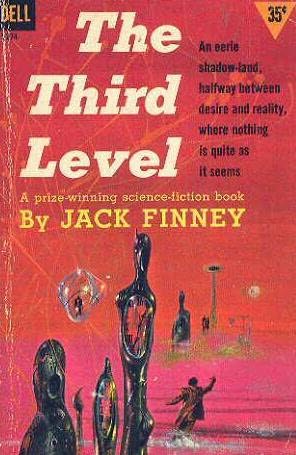
Speculative Fiction Shorts: "The Third Level" by Jack Finney

The presidents of the New York Central and the New York, New Haven and Hartford railroads will swear on a stack of timetables that there are only two. But I say there are three, because I've been on the third level at Grand Central Station. Yes, I've taken the obvious step: I talked to a psychiatrist friend of mine, among others. I told him about the third level at Grand Central Station, and he said it was a waking-dream wish fulfillment. He said I was unhappy. That made my wife kind of mad, but he explained that he meant the modern world is full of insecurity, fear, war, worry, and all the rest of it, and that I just want to escape. Well, hell, who doesn't? Everybody I know wants to escape, but they don't wander down into any third level at Grand Central Station.

But that's the reason, he said, and my friends all agreed. Everything points to it, they claimed. My stamp collecting, for example--that's a "temporary refuge from reality." Well, maybe, but my grandfather didn't need any refuge from reality; things were pretty nice and peaceful in his day, from all I hear, and he started my collection. It's a nice collection, too, blocks of four of practically every U.S. issue, first-day covers, and so on. President Roosevelt collected stamps, too, you know.

Any way, here's what happened at Grand Central. One night last summer I worked late at the office. I was in a hurry to get uptown to my apartment, so I decided to subway from Grand Central because it's faster than the bus.

Now, I don't know why this should have happened to me. I'm just an ordinary guy named Charley, thirty-one years old, and I was wearing a tan gabardine suit and a straw hat with a fancy band--I passed a dozen men who looked just like me. And I wasn't trying to escape from anything; I just wanted to get home to Louisa, my wife.

I turned into Grand Central form Vanderbilt Avenue and went down the steps to the first level, where you take trains like the Twentieth Century. Then I walked down another flight to the second level, where the suburban trains leave from, ducked into an arched doorway heading for the subway--and got lost. That's easy to do. I've been in and out of Grand Central hundreds of times, but I'm always bumping into new doorways and stairs and corridors. Once I got into a tunnel about a mile long and came out in the lobby of the Roosevelt Hotel. Another time I came up in an office building on Forty-sixth Street, three blocks away.

Sometimes I think Grand Central is growing like a tree, pushing out new corridors and staircases like roots. There's probably a long tunnel that nobody knows about feeling its way under the city right now, on its way to Times Square, and maybe another to Central Park. And maybe--because for so many people through the years Grand Central has been an exit, a way of escape--maybe that's how the tunnel I got into . . . but I never told my psychiatrist friend about that idea.

The corridor I was in began angling left and slanting downward and I thought that was wrong, but I kept on walking. All I could hear was the empty sound of my own footsteps and I didn't pass a soul. Then I heard that sort of hollow roar ahead that means open space, and people talking. Then tunnel turned sharp left; I went down a short flight of stairs and came out on the third level at Grand Central Station. For just a moment I thought I was back on the second level, but I saw the room was smaller, there were fewer ticket windows and train gates, and the information booth in the center was wood and old-looking. And the man in the booth wore a green eyeshade and long black sleeve-protectors. The lights were dim and sort of flickering. Then I saw why: they were open-flame gaslights.

There were brass spittoons on the floor, and across the station a glint of light caught my eye: a man was pulling a gold watch from his vest pocket. He snapped open the cover, glanced at his watch, and frowned. He wore a dirty hat, a black four-button suit with tiny lapels, and he had a big, black, handle-bar mustache. Then I looked around and saw that everyone in the station was dressed like 1890 something; I never saw so many beards, sideburns and fancy mustaches in my life. A woman walked in through the train gate; she wore a dress with leg-of-mutton sleeves and skirts to the top of her high-buttoned shoes. Back of her, out on the tracks, I caught a glimpse of a locomotive, a very small Currier & Ives locomotive with a funnel-shaped stack. And then I knew.

To make sure, I walked over to a newsboy and glanced at the stack of papers at his feet. It was the World; and the World hasn't been published for years. The lead story said something about President Cleveland. I've found that front page since, in the Public Library files, and it was printed June 11, 1894.

I turned toward the ticket windows knowing that here--on the third level at Grand Central--I could buy tickets that would take Louisa and me anywhere in the United States we wanted to go. In the year 1894. And I wanted two tickets to Galesburg, Illinois.

Have you ever been there? It's a wonderful town still, with big old farm houses, huge lawns, and tremendous trees whose branches meet overhead and roof the streets. And in 1894, summer evenings were twice as long, and people sat out on their lawns, the men smoking cigars and talking quietly, the women waving palm-leaf fans, with the fireflies all around, in a peaceful world. To be back there with the First World War still twenty years off, and World War II over forty years in the future . . . I wanted two tickets for that.

The clerk figured the fare--he glanced at my fancy hatband, but he figured the fare--and I had enough for two coach tickets, one way. But when I counted out the money and looked up, the clerk was staring at me. He nodded at the bills. "That ain't money, mister," he said, "and if you're trying to skin me you won't get very far," and he glanced at the cash drawer beside him. Of course the money was old-style bills, half again as big as the money we use nowadays, and different-looking. I turned away and got out fast. There's nothing nice about jail, even in 1894.

And that was that. I left the same way I came, I suppose. Next day, during lunch hour, I drew $300 out of the bank, nearly all we had, and bought old-style currency (that really worried my psychiatrist friend). You can buy old money at most any coin dealer's, but you have to pay a premium. My $300 bought less than $200 in old-style bills, but I didn't care; eggs were thirteen cents a dozen in 1894.

But I've never again found the corridor that leads to the third level at Grand Central Station, although I've tried often enough.

Louisa was pretty worried when I told her all this and didn't want me to look for the third level any more, and after a while I stopped; I went back to my stamps. But now we're both looking, every weekend, because now we have proof that the third level is still there. My friend Sam Weiner disappeared! Nobody knew where, but I sort of suspected because Sam's a city boy, and I used to tell him about Galesburg--I went to school there--and he always said he liked the sound of the place. And that's where he is, all right. In 1894.

Because one night, fussing with my stamp collection, I found--well, do you know what a first-day cover is? When a new stamp is issued, stamp collectors buy some and use them to mail envelopes to themselves on the very first day of sale; and the postmark proves the dates. The envelope is called a first-day cover. They're never opened; you just put blank paper in the envelope.

That night, among my oldest first-day covers, I found one that shouldn't have been there. But there it was. It was there because someone had mailed it to my grandfather at his home in Galesburg; that's what the address on the envelope said. And it had been there since July 1894--the postmark showed that--yet I didn't remember it at all. The stamp was a six-cent, dull brown, with a picture of President Garfield. Naturally, when the envelope came to Granddad in the mail, it went right into his collection and stayed there--till I took it out and opened it.
The paper inside wasn't blank. it read:

941 Willard Street
Galesburg, Illinois
July 18, 1894

Charley:
I got to wishing that you were right. Then I got to believing you were right. And, Charley, it's true: I found the third level! I've been here two weeks, and right now, down the street at the Daly's, someone is playing a piano, and they're all out on the front porch singing Seeing Nellie Home. And I'm invited over for lemonade. Come on back, Charley and Louisa. Keep looking till you find the third level. It's worth it, believe me!

The note is signed Sam.

At the stamp and coin store I go to, I found out that Sam bought $800 worth of old style currency. That ought to set him up in a nice little hay, feed, and grain business; he always said that's what he really wished he could do, and he certainly can't go back to his old business. Not in Galesburg, Illinois, in 1894. His old business? Why, Sam was my psychiatrist.

***

Copyright 1950 by Jack Finney, © renewed 1978 by Jack Finney


Saturday, September 11, 2010

Free E-Book On Hemingway's Library

Found a link to a free e-book on Ernest Hemingway's library and since I am seemingly unable to post it on Facebook, I will put it up here instead.


Hemingway's Library

Sunday, September 5, 2010

Goodbye, Summer Reading

Looks like my fellow LibraryThing members are (for the most part) putting aside the beach reads and cracking open a lot of Serious Literature for the fall.

WHAT LIBRARYTHING MEMBERS ARE READING - SEPTEMBER 2010:
1. Mockingjay by Suzanne Collins 58
2. The Girl With the Dragon Tattoo by Stieg Larsson 41
3. The Girl Who Played with Fire by Stieg Larsson 34
4. The Passage by Justin Cronin 29
5. Eat, Pray, Love: One Woman's Search for Everything Across Italy, India and Indonesia by Elizabeth Gilbert 21
6. Eat, Pray, Love: One Woman's Search for Everything Across Italy, India and Indonesia by Elizabeth Gilbert 18
7. Catching Fire by Suzanne Collins 17
8. Wolf Hall by Hilary Mantel 15
9. The Pillars of The Earth by Ken Follett 15
10. Freedom: A Novel by Jonathan Franzen 14
11. The Girl Who Kicked the Hornet's Nest by Stieg Larsson 14
12. Anna Karenina by Leo Tolstoy 13
13. Jane Eyre by Charlotte Brontë 13
14. The Thousand Autumns of Jacob de Zoet by David Mitchell 12
15. To Kill a Mockingbird by Harper Lee 12
16. Kraken by China Miéville 11
17. The Windup Girl by Paolo Bacigalupi 11
18. The Elegance of the Hedgehog by Muriel Barbery 11
19. Water for Elephants by Sara Gruen 11
20. The Book Thief by Markus Zusak 11
21. Faithful Place by Tana French 10
22. The Forgotten Garden by Kate Morton 10
23. Under the Dome by Stephen King 10
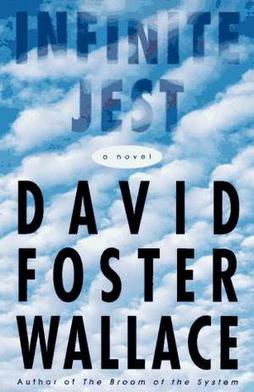
24. Infinite Jest by David Foster Wallace 10
25. The Help by Kathryn Stockett 10
26. Wuthering Heights by Emily Brontë 10
27. The Little Stranger by Sarah Waters 9
28. The Lost Symbol by Dan Brown 9
29. The Hunger Games by Suzanne Collins 9
30. Dracula by Bram Stoker 9
31. On the Road by Jack Kerouac 9
32. Frankenstein by Mary Shelley 9
33. Odyssey by Homer 9
34. One Hundred Years of Solitude by Gabriel García Márquez 9
35. One Day by David Nicholls 8
36. The Children's Book by A. S. Byatt 8
37. The Lacuna by Barbara Kingsolver 8
38. Pride and Prejudice and Zombies by Jane Austen 8
39. Kafka on the Shore by Haruki Murakami 8
40. A Game of Thrones by George R. R. Martin 8
41. The Shadow of the Wind by Carlos Ruiz Zafón 8
42. The Road by Cormac McCarthy 8
43. Lolita by Vladimir Nabokov 8
44. Breaking Dawn by Stephenie Meyer 8
45. The Time Traveler's Wife by Audrey Niffenegger 8
46. Harry Potter and the Deathly Hallows by J. K. Rowling 8
47. Nightshade by Andrea Cremer 7
48. The Clockwork Angel by Cassandra Clare 7
49. The Swan Thieves by Elizabeth Kostova 7
50. The City & The City by China Miéville 7


Monday, August 9, 2010

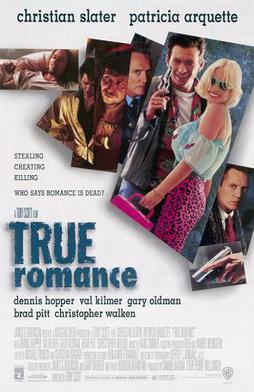
Miniature Movie Review: TRUE ROMANCE (Tony Scott, 1993) (rewatch)

True Romance (1993)
Stars Christian Slater, Patricia Arquette, and Dennis Hopper
Written by Quentin Tarantino and Roger Avary (uncredited)
Directed by Tony Scott

Features a hilarious comic turn by then-up-and-comer Brad Pitt. And Dennis Hopper's scene with Christopher Walken is his best ever (which is saying something).

Rating: 9/10

BONUS! You can read the entire original script for the film here.


Wednesday, July 28, 2010

Okay - Either It's Recommended Or It's Not

LibraryThing is one of my favorite sites on the Internets, but as of late their automatic recommendations feature has been driving me crazy. This is how it works: LibraryThing lets you catalogue all your books (up to 200 titles that is - if you want to catalogue more, there's a nominal annual fee) and then helps you find people that are interested in the same authors as you, gives you recommendations on what to read next (usually much more accurately than say, Amazon, unless of course you rate your whole library there), allows you to check the contents of your library from anything that has an Internets connection, including your mobile phone (a feature that would be quite helpful to me if I, in fact, owned a mobile phone), and so on and so forth. Basically, it's social networking for book geeks, and it's about goddamn time somebody thought of it, I say.

So the deal with the recommendations is this - you catalogue all (or most) (or some) of your books, and LibraryThing gives you back a big-ass (like 1,000 titles) list of recommended books that aren't already in your library. It's usually pretty accurate - for example, LT has recommended titles by authors like Salinger, Golding, and Bradbury, all of whom I like, and none of whom they know I've read. Having said that, there's sometimes a little systemic programming glitch that drives me crazy. To wit: every other time I log onto the site, I look down at the list of automatic recommendations and I'll see listed there, along with 2 or 3 other titles, Thus Spoke Zarathustra by Friedrich Nietzsche.


Cover courtesy Penguin Books. Cover image: Detail from Sunset, Mont Blanc by Wenzel Hablik, in the Wenzel Hablik Museum. Copyright Wenzel Hablik Museum, Itzahoe.

This is great, and I'm very flattered that LibraryThing thinks that I may be able to read the infamously difficult and ambiguous Nietzsche with something approaching comprehension, I wish they would decided whether they really want to recommend this to me our not, because the next time I log on to the site, it isn't there. I don't see it on the home page, and when I click on the link to the recommendations page, it's nowhere to be found; but then I log on again a couple of days later and it's back. A couple of days later, it's gone again. A couple of days later... you get the idea.

The fascinating thing to me is I'm now much more interested in reading this book than I would be if it had just come up as a recommendation and stayed there. But I still wanna know... what's the deal, LT? Am I worthy of reading Nietzsche or not? I guess I'll have to take the plunge and find out for myself.

Sunday, July 18, 2010

Django Reinhardt

Here's the deal: I am totally not impressed by other guitar players. With the exception of Stanley Jordan, Robert Johnson, Jerry Garcia, and perhaps 2 or 3 others that I'm can't remember right now, it's really unusual for me to sit up and take notice of a guitarist; I've been playing myself for over a quarter of a century, and while I don't consider myself particularly great at it, I know too much about the mechanics of the instrument to be really blown away by anyone who isn't a player of really exceptional passion, technique, and/or imagination. What I'm attempting to get at is this - when I tell you that a guitar player knocked me out of my chair, I'm talking about something that has happened (maybe) a dozen times in my life.

Such was the case yesterday when I was surfing around YouTube and I saw some performance footage of jazz great Django Reinhardt for the first time.

There I was, sitting in our living room with my 4 year old daughter, playing with our new laptop while she was watching cartoons, watching mostly classic rock-type videos when I got a sudden random urge to see if they had any Django footage. I had heard his records on several different occasions and had heard the amazing story of how he had badly injured two of his left-hand fingers in a fire and still managed to play, but I realized I had never seen the man play. I did a quick search, found this video, got to about the 2:50 mark on the clip (where he plays a particularly blinding run during his solo), and literally started YELLING (much to my daughter's chagrin), "WHAT?!? WHAT?!?"


I mean, is that one of the most amazing things (and humbling) you've ever seen in your life or what? If that doesn't inspire you, I guess I don't know what will.

Monday, July 12, 2010

Rock Improvisation - Links And Examples

As is often the case now in the Age of the Internets, I'll get an idea for a post, do a quick Google search on the topic, and find an article where someone has said everything (or almost everything) I wanna say about it. So anyway, here's a link to the article (on, in this case, improvisation in rock music), from the excellent Perfect Sound Forever website:

Improvisation?

I also found some useful information from the following text; I of course take exception to the characterization of the Grateful Dead's improvisations as "ponderous", but I gotta give some respect to any author that's able to discuss the Dead, John Coltrane, and Black Flag in the space of two pages and say something significant about each one.

From "The Path to Freedom" in Free Jazz and Free Improvisation by Todd S. Jenkins

For those of you who still have no idea of what the hell these guys are talking about, here's of few of my favorite examples of rock improvisation, courtesy of YouTube:


Johnny B. Goode (Live in Berkeley, CA 5/30/70) - Jimi Hendrix

Monday, July 5, 2010

Arthur & George - Julian Barnes

I was surfing around LibraryThing (one of favorite websites) and found the following book, which I was surprisingly unaware of up until now (although I have heard of Julian Barnes before):

Arthur & George by Julian Barnes - LibraryThing

Sounds interesting, doesn't it? Drop me a line in the comments section if you've read it.


Thursday, July 1, 2010

The Experts Pick The Best Robert E. Howard Conan Stories

Hi, folks. I've been spending the last few weeks getting re-acquainted with the work of Conan creator Robert E. Howard, and I thought it might be fun to surf around the Internets and see if I could find if there's any kind of consensus regarding what are the best of his Conan tales. Basically what I've done here compiled the selections from three main sources: the stories that John Clute selected for the Penguin Modern Classics anthology Heroes in the Wind: From Kull To Conan; the stories selected for the two Best of Robert E. Howard volumes, edited by noted REH scholar Rusty Burke; and the top five stories selected by forum posters at Conan.com, the official REH website.

Here are the results:

Stories selected for HEROES IN THE WIND: FROM KULL TO CONAN (Penguin; John Clute, ed.):
TOWER OF THE ELEPHANT
QUEEN OF THE BLACK COAST
A WITCH SHALL BE BORN
RED NAILS

Stories selected for THE BEST OF ROBERT E. HOWARD VOLUME 1: CRIMSON SHADOWS and VOLUME 2: GRIM LANDS (Del Rey; Rusty Burke, ed.):
PEOPLE OF THE BLACK CIRCLE
BEYOND THE BLACK RIVER
TOWER OF THE ELEPHANT
RED NAILS

Top 5 REH Conan stories as selected by forum posters at Conan.com (and % of votes obtained):
1) BEYOND THE BLACK RIVER (19%)
2) HOUR OF THE DRAGON (12%)
3) RED NAILS (10%)
4) PEOPLE OF THE BLACK CIRCLE (9.5%)
5) QUEEN OF THE BLACK COAST (9.1%)

So the final tally is something like this -

On all 3 lists:
RED NAILS

Selected by Clute and Burke only:
TOWER OF THE ELEPHANT

Selected by Clute and posters only:
QUEEN OF THE BLACK COAST

Selected by Burke and posters only:
PEOPLE OF THE BLACK CIRCLE
BEYOND THE BLACK RIVER

Selected by Clute only:
A WITCH SHALL BE BORN

Selected by posters only:
HOUR OF THE DRAGON

So what do you think, Howard fans? Is this a pretty good sample of the best of REH's Conan, or is there some glaring omission that newbies should be made aware of? Let me know.

PS If you're rarin' to start reading some of these Conan yarns, most of Howard's fiction (as well as a decent chunk of his letters, poetry, essays, etc.) can be found online here.

Monday, June 28, 2010

What Do H.P. Lovecraft And The Grateful Dead Have In Common?

Not too much. The only things I can come up with are (1) they are both the names of American psychedelic rock bands formed in the 1960s, and (2) they're the subject matter of the two items I have shipping from Amazon.com! (Yes, my life is officially so boring that the best thing I can come up with for a blog post is something about items I'm getting from Amazon. Look for Art's next post, in which he enumerates his favorite breakfast cereals!) Specifically, I'm getting copies of An H.P. Lovecraft Encyclopedia by S.T. Joshi and David E. Schultz and Live/Dead by the Grateful Dead. (I'm actually listening to the Live/Dead version of "Dark Star" on Rhapsody as I write this.)

I actually had a fairly tough time deciding what to get. The Lovecraft encyclopedia was a gimme, 'cause I use the (incomplete) online version of it at Google Books all the time. (This brings me to important (albeit discursive) point I wanted to make. To wit: ATTENTION PUBLISHERS/ AUTHORS/ EVERYONE AT GOOGLE BOOKS: Having your books available on Google Books is an excellent marketing tool. Even if I can read your book online, if I find it useful and/or entertaining, I still want to own a copy of it. I don't really like reading books on a computer, so if there is a book that I find online that I use all the time or that I am pretty sure I will read in its entirety, I will probably end up purchasing it. I am sure there are lots and lots of other people that feel the same way I do.) The Dead CD was a little harder - I had another 7+ bucks to play with 'cause I decided I wanted to be eligible for Super Saver Shipping, so it was between the Dead CD and A Game Of Thrones (the first book in George R.R. Martin's A Song of Ice And Fire series, which a friend described as "turning the fantasy genre upside-down"), as they were each a little over 7 bills. I finally decided on the Dead CD simply because although I'm a long-time fan (saw my 1st show back in '87), I really don't have a lot of the band's stuff on CD and I've wanted Live/Dead in particular for a very long time.

Ah, the joys and agonies of capitalism. Did I make the right decision? I'll have a better handle on that once I actually obtain said items, but, in the meantime, what do you think?